
5 Questions with Lina’s Thobe
July 13th, 2026
3-Minute Read
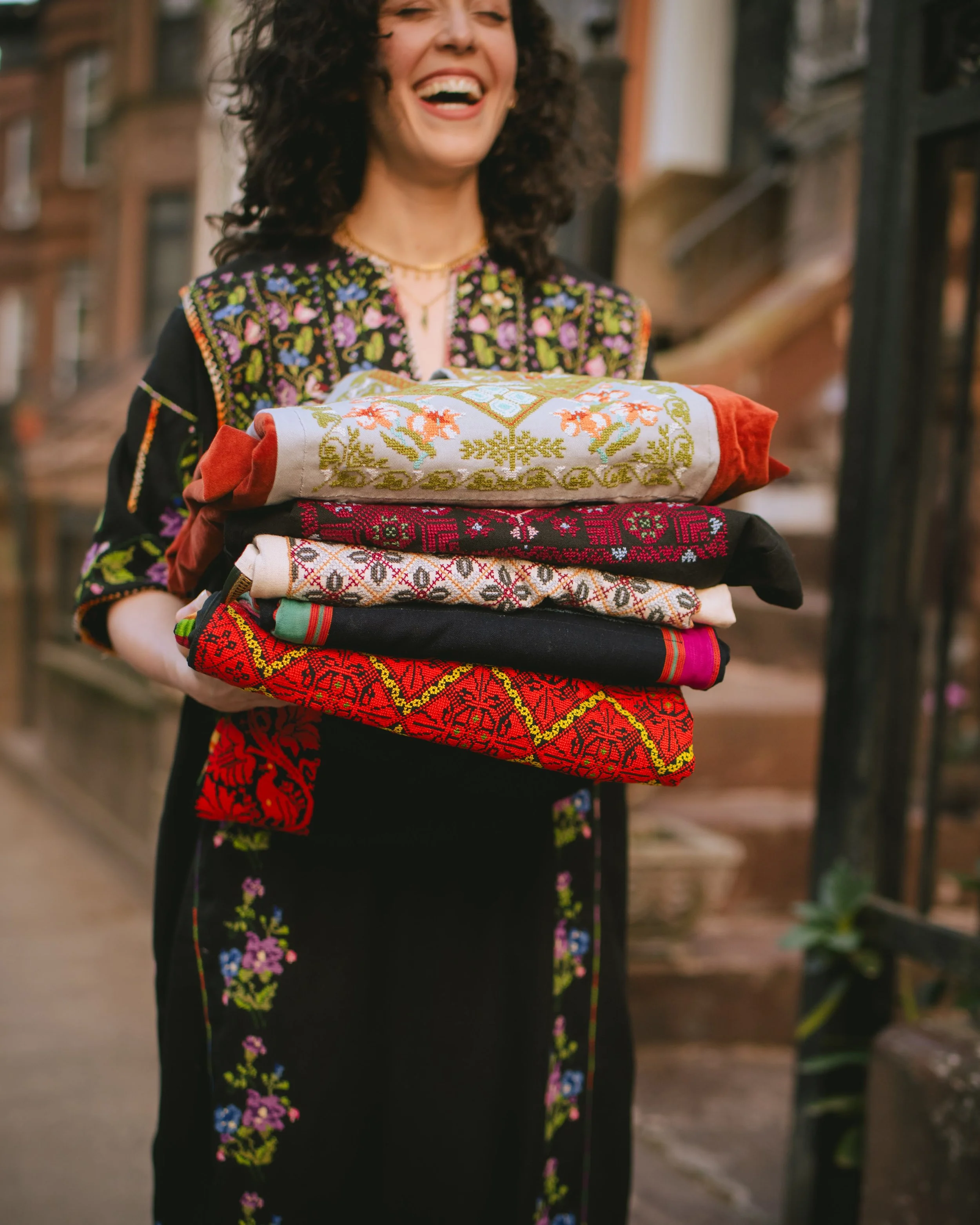
Lina’s Thobe
Some traditions are inherited. Others are found, patiently waiting to reconnect us with who we are.
For Lina, that reconnection began in 2019 when she discovered tatreez, the centuries-old Palestinian art of embroidery. As a Palestinian Panamanian in the diaspora, what started as a personal desire to strengthen her connection to her heritage soon became something much greater. Stitch by stitch, she taught herself to create a handmade Palestinian thobe from scratch, uncovering not only a remarkable craft but a tradition where every garment carries the story of the person who wears it.
That journey gave rise to Lina’s Thobe, a platform rooted in cultural preservation, education, and storytelling. Through her work, Lina helps Palestinians across the diaspora reconnect with their heritage while inviting others to discover the beauty, history, and resilience woven into every embroidered motif. Her philosophy is simple yet deeply moving: when you tap into tatreez, you tap into Palestine.
In our “5 Questions With” series, Lina reflects on the journey that led her to tatreez, the lessons she’s learned along the way, and why preserving this living tradition has become her life’s work.
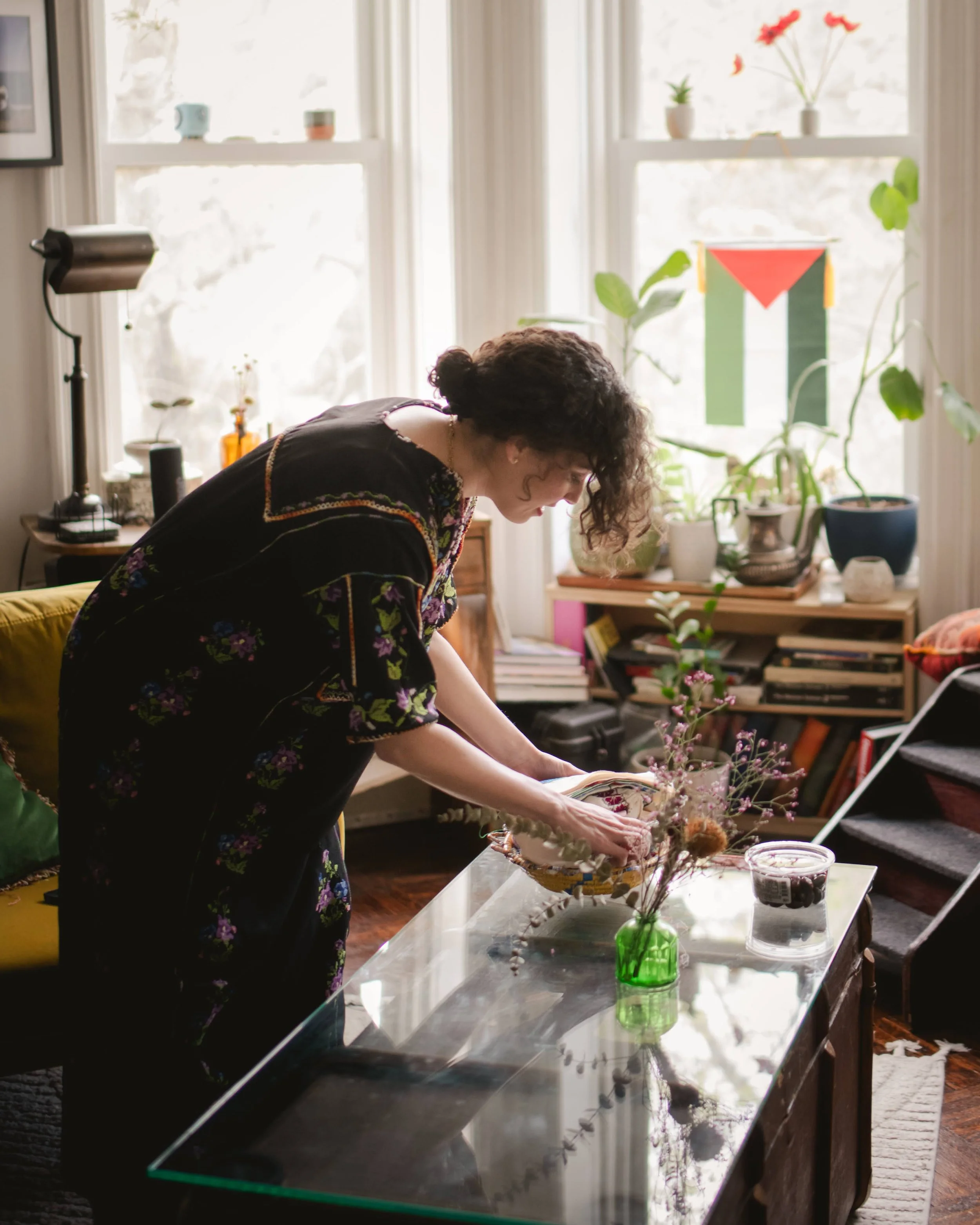
Lina’s Thobe
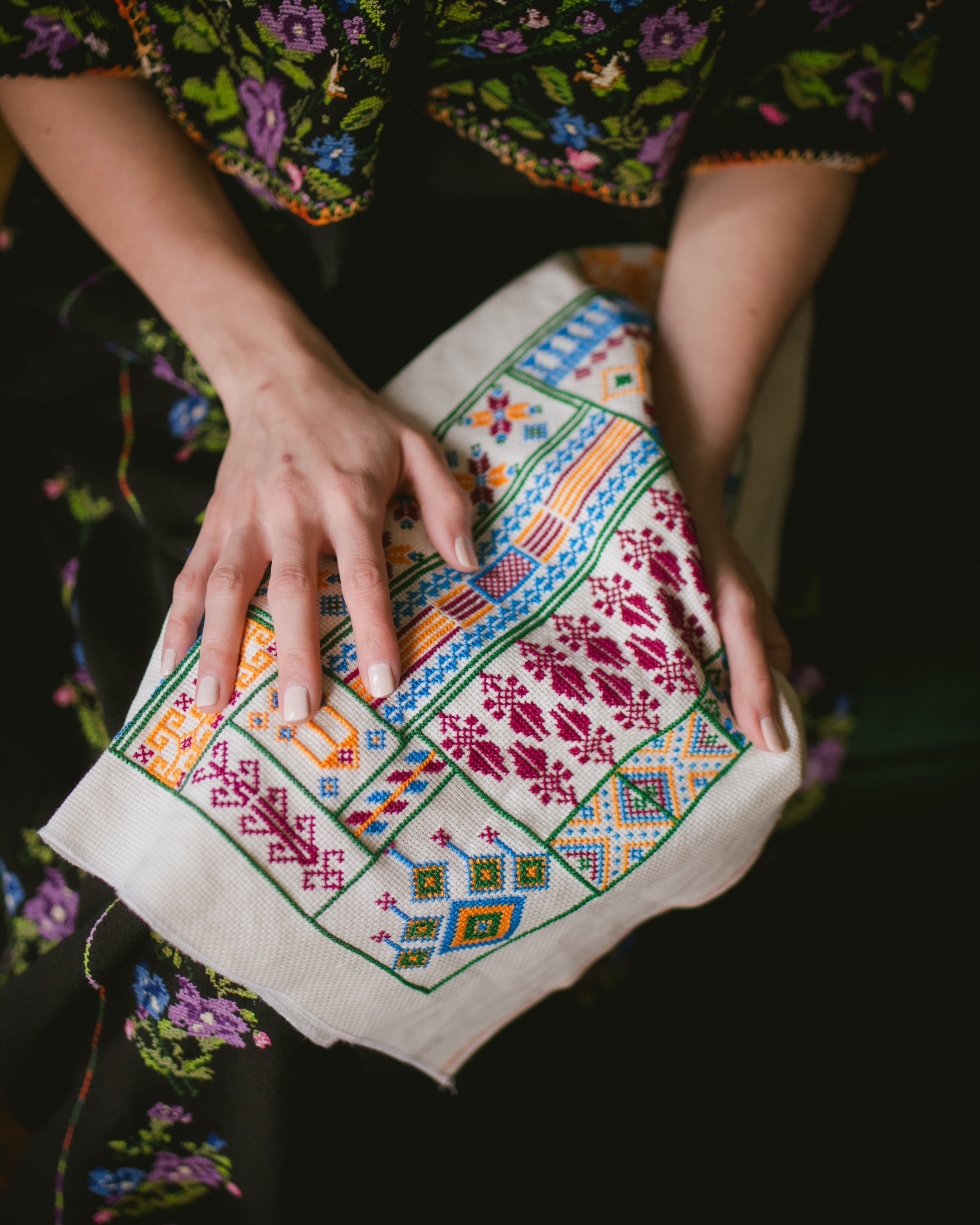
Lina’s Thobe
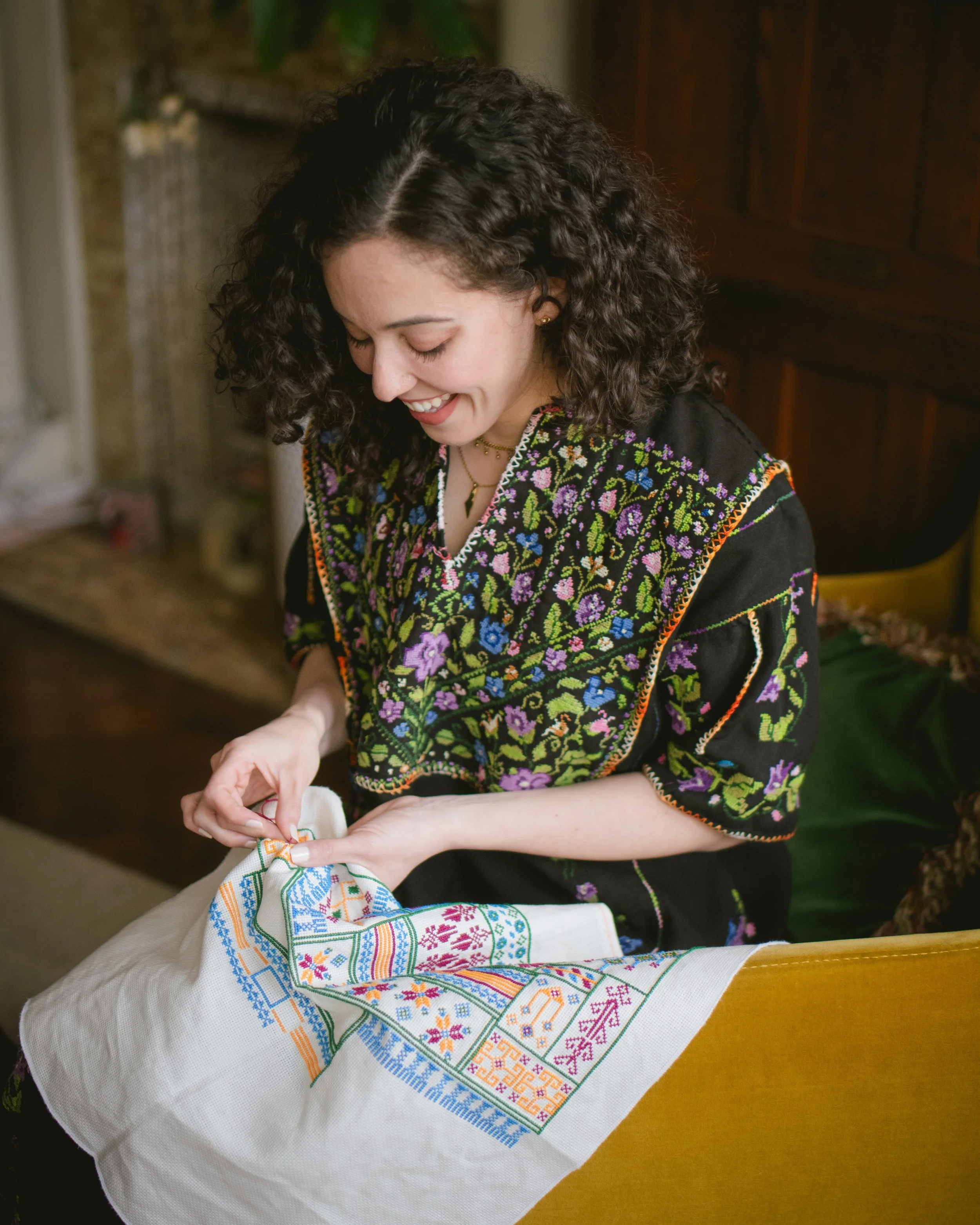
Lina’s Thobe
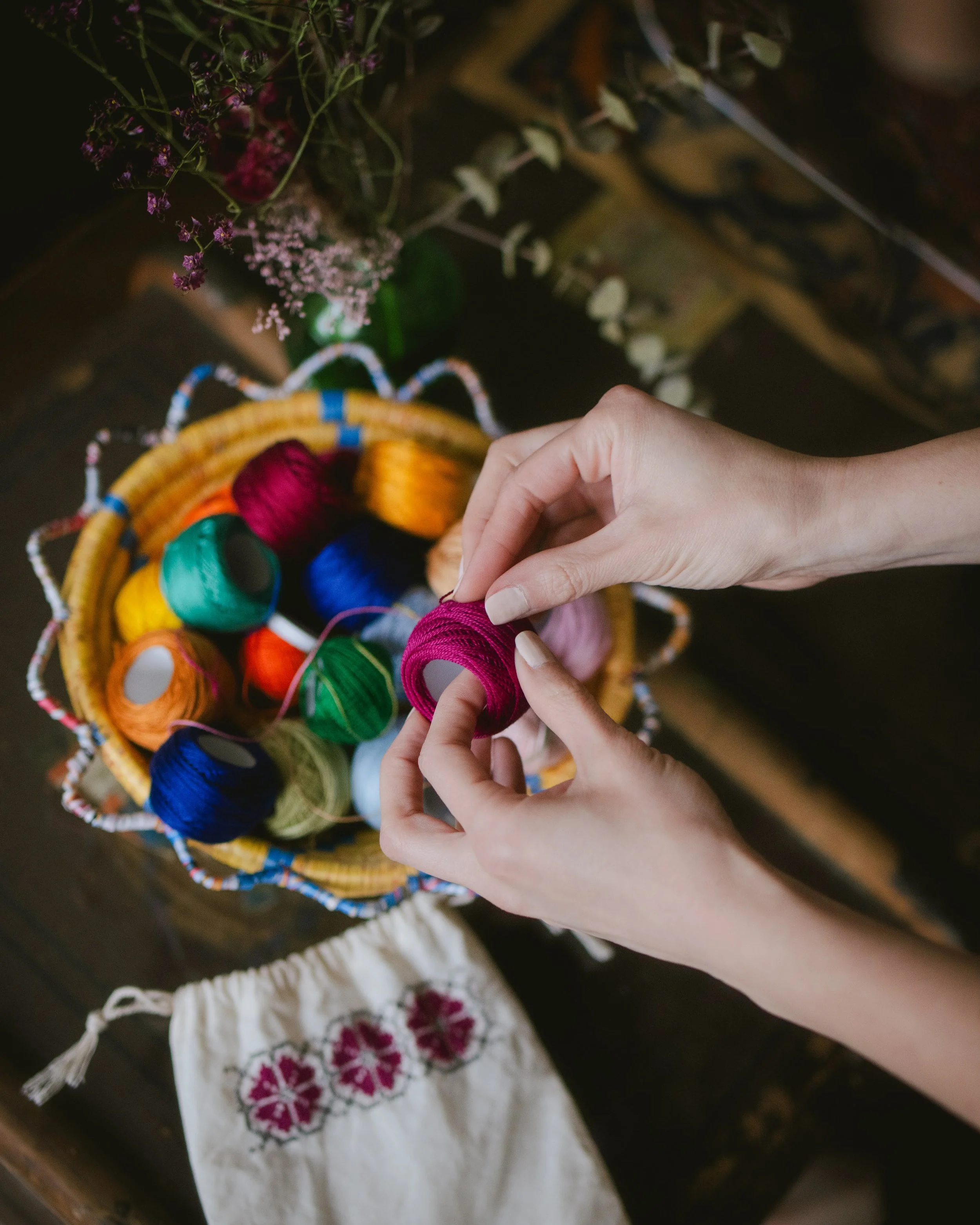
Lina’s Thobe
Q.1 Was there a particular moment when you realized this would become more than a craft or passion?
It wasn’t a single moment, but an accumulation of them. Tatreez is a slow practice, which is both its beauty and its limitation: you cannot truly experience it without time and repetition.
For me, it was the gradual process of copying existing patterns to bring them into my home, learning motifs by stitching them onto a map of Palestine, and reading the stories behind preserved thobes. Then came the intentional act of telling my own story as I brought my first thobe to life over two years. It was in the repetitive motion of threading my needle through fabric, hour after hour, that I finally realized I felt closer than ever to my Palestinian roots, my ancestors, and the generations yet to come.
Q.2 Are there traditional techniques you are particularly passionate about preserving?
When people discuss preserving traditional crafts like tatreez—especially those at risk of appropriation or being lost—the discourse often implies documenting techniques as if they were relics to be placed behind glass in a museum.
What I am passionate about preserving is not a specific technique tied to a single village, but the practice of tatreez itself. I focus on the concept of telling your story through stitches and helping people access what makes this tradition so beautiful: it is a living, evolving act of creation that requires time and your own hands. My aim is to ignite the muscle memory inherited from previous generations, ensuring we continue to share our stories through the needle.
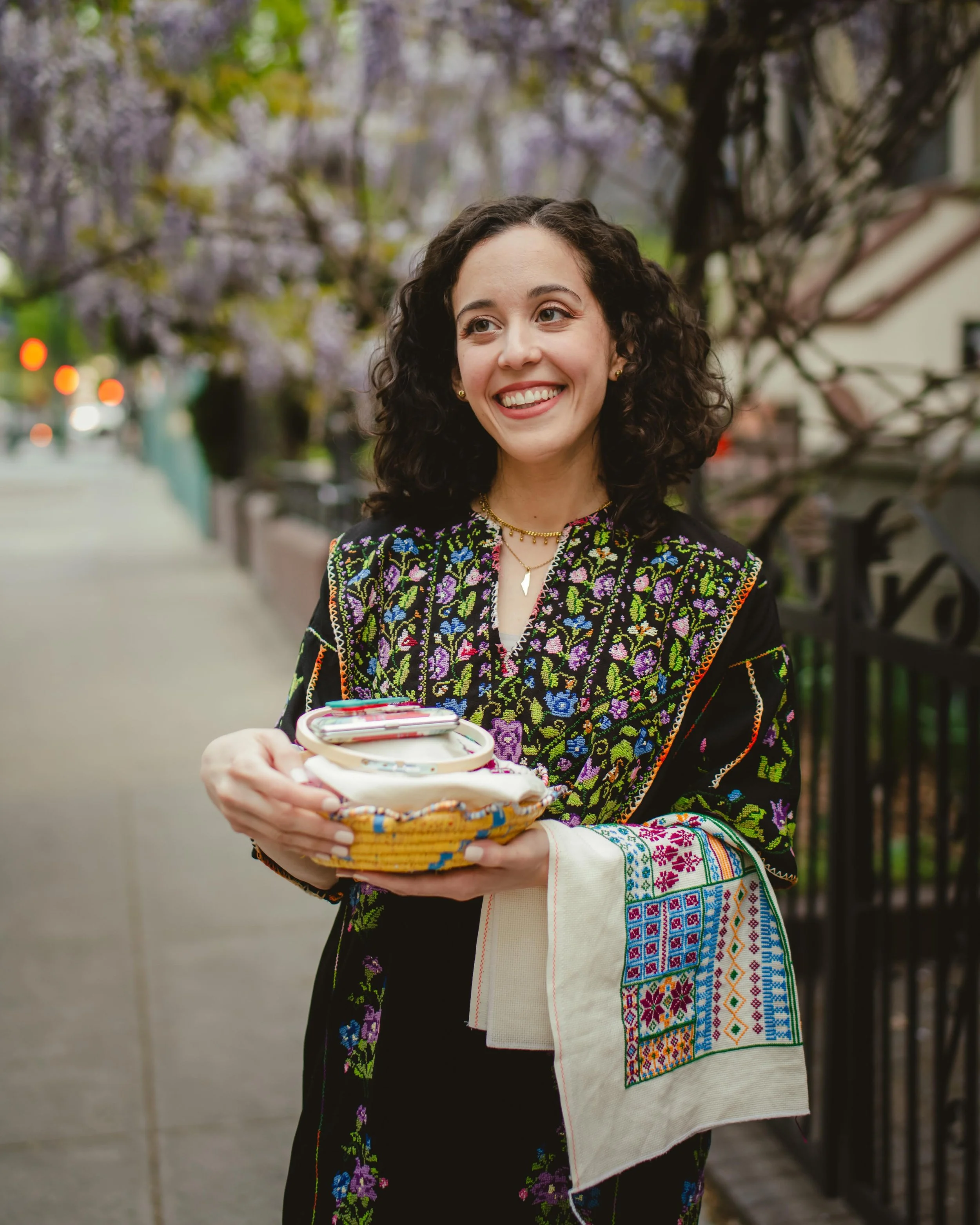
“I want future generations to know that they have always been part of this story, and that if they choose to pick up the needle, they can continue telling their own stories through ours.”
Q.3 Is there a piece you’ve created that holds special meaning for you?
For those who have followed my journey, the answer is obvious: my first handmade thobe.
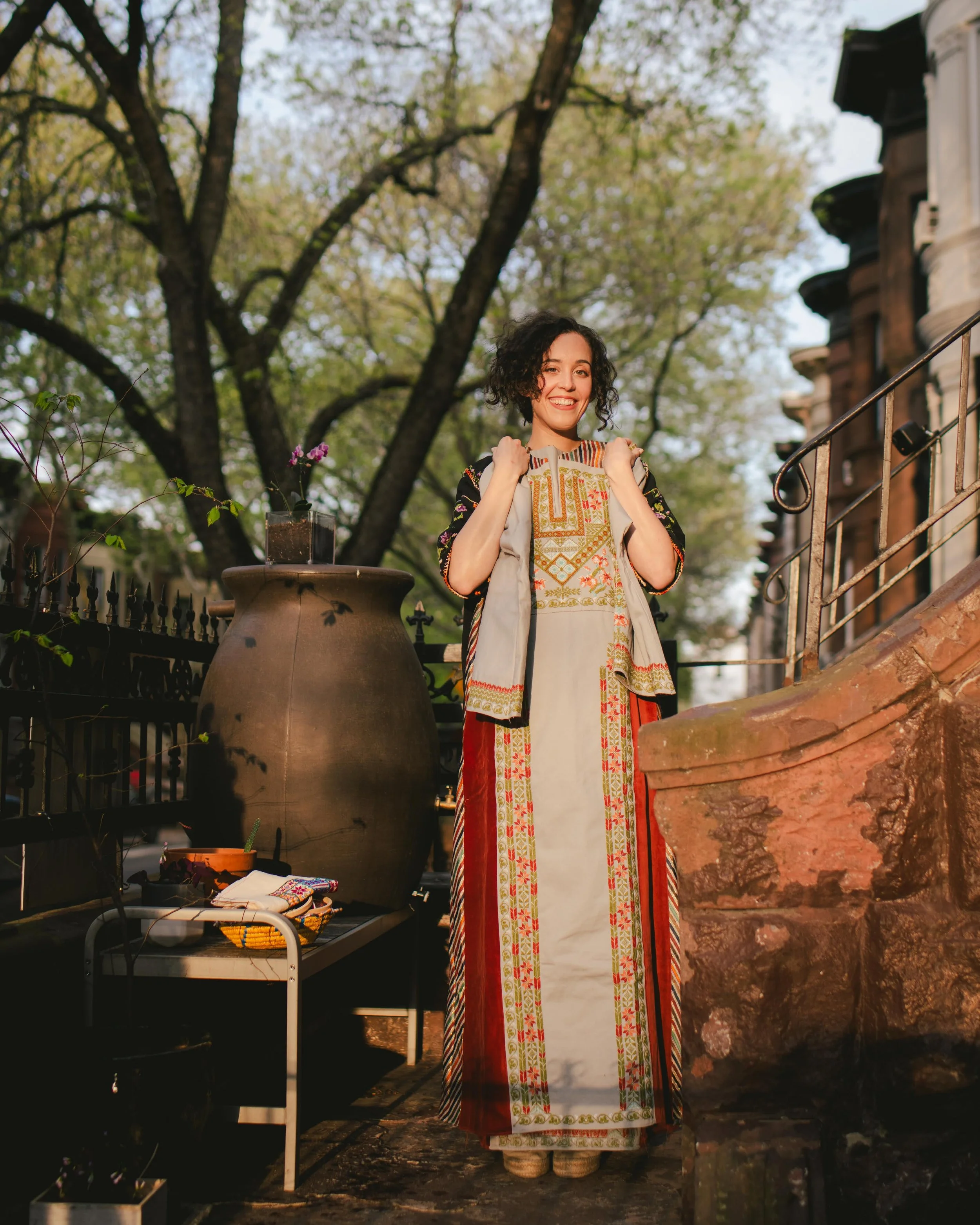
When I started, I was confident in my stitching and had begun designing my own tatreez patterns, but I had never constructed something wearable or committed to a project of this scale. I originally imagined this thobe would be a 'test run'—a practice piece before creating a grander gown for my wedding. But the dress took two years to complete, and life did not wait for a second attempt. I finished it just two weeks before my wedding, and the first time I wore it for others to see was on the day I married my now-husband.
The garment holds many visible mistakes, but it also carries two years of my life: moving apartments, starting a new job, completing my master’s degree, adopting a cat, experiencing heartbreak, traveling, and having weekly conversations with my grandmother. Every stitch marks a chapter. It is my biggest treasure.
Q.4 A color you keep returning to?
My answer is constantly changing. If you had asked me during the throes of making my first thobe, I would have said burgundy red. I was in my 'autumn era,' obsessed with falling leaves, the start of school years, and shortening days.
Now, I find myself returning to a combination of warm magenta and welcoming yellow. It feels like spring transitioning into summer: long days, warmth, and the simple joy of gathering with others in good company (doing loads and loads of tatreez on balconies with a beautiful breeze that carries scents of jasmine flowers and freshly brewed mint tea).
Next year, I may be fixated on something entirely different.
Lina’s Thobe
Q.5 If your designs could tell future generations one story about the Palestinian culture, what would you want that story to be?
I want future generations to know that they have always been part of this story, and that if they choose to pick up the needle, they can continue telling their own stories through ours.
My designs reflect my unique experience as a Palestinian-Panamanian woman raised with faith in a liberated Palestine. I believe that while we fight for the land, it is the people who keep Palestine alive. Our stitches are proof of that resilience; as long as we carry these traditions, Palestine lives on in us.